
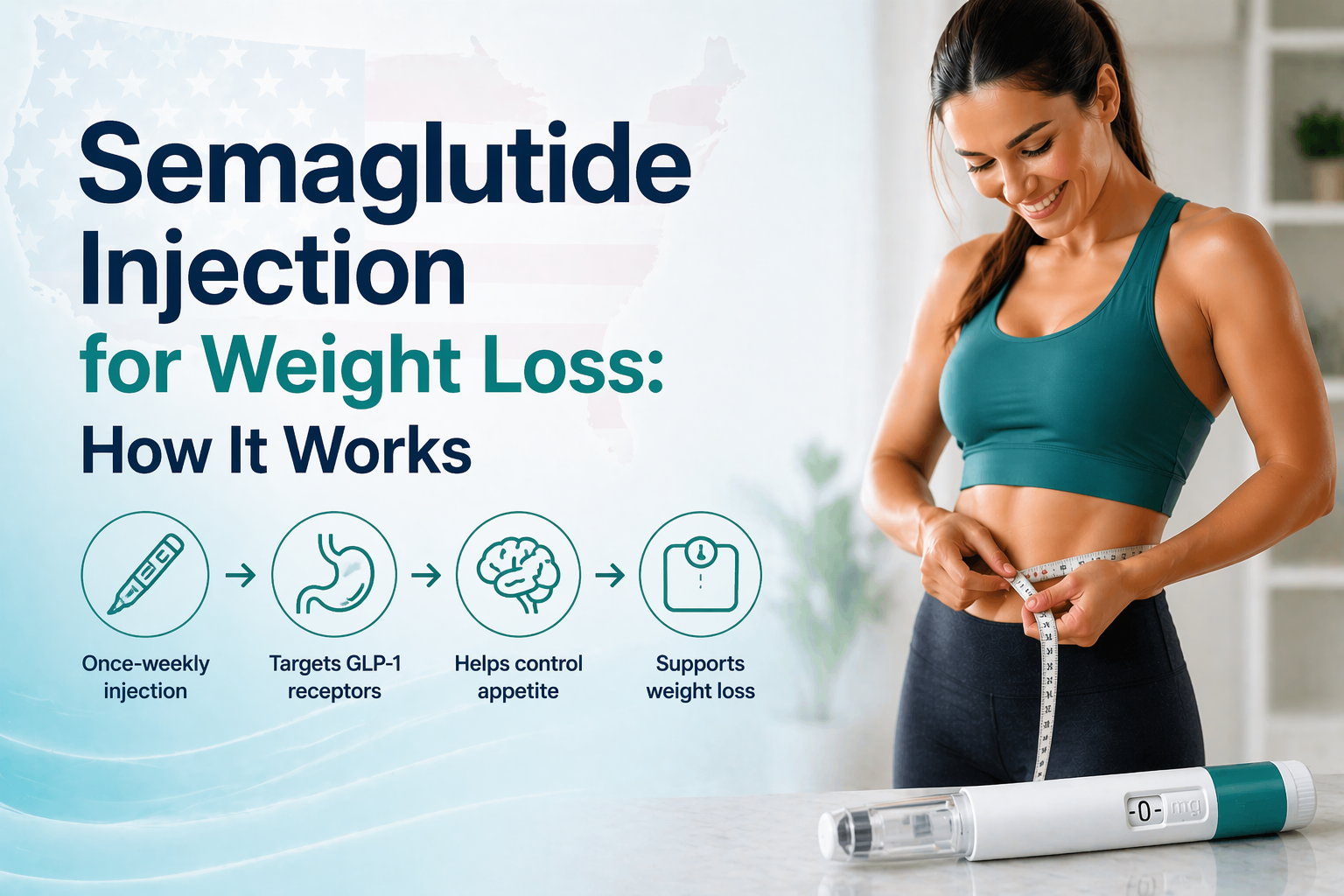
1. Semaglutide Injection for Weight Loss: How It Works
Semaglutide injection has become a widely discussed option for weight management in recent years. Originally developed to support blood sugar control in adults with type 2 diabetes, it is now also used in medically supervised weight management programs.
This medication belongs to a class known as GLP-1 receptor agonists. These treatments mimic natural hormones in the body that help regulate appetite, food intake, and metabolism. Because of this mechanism, semaglutide is often explored by individuals looking for structured support in managing body weight
Unlike traditional approaches that rely only on diet and exercise, semaglutide works at a hormonal level to influence hunger signals and energy balance. However, it is typically used as part of a broader plan that includes lifestyle changes.
2. What does GLP-1 Effect do in your body?
Semaglutide may support weight loss by addressing one of the most challenging aspects of dieting: appetite control.
It interacts with receptors in the brain that regulate hunger, helping reduce the urge to eat frequently. Many individuals report feeling full sooner during meals and experiencing fewer cravings between meals.
Key ways it may help include:
- Reducing appetite and calorie intake
- Increasing feelings of fullness after eating
- Decreasing cravings for high-calorie foods
- Supporting more consistent eating patterns
By helping regulate eating behavior, semaglutide may contribute to a calorie deficit over time, which is a key factor in weight loss.
It is important to understand that semaglutide does not directly “burn fat.” Instead, it works by influencing behaviors and biological processes that can support weight management.
3. How much weight can you lose?
Weight loss outcomes with semaglutide vary widely between individuals. Factors such as dosage, consistency, diet, and activity level all play a role.
In general:
- Some individuals may notice gradual weight changes over several weeks
- More noticeable results may develop over a few months
- Long-term outcomes depend on sustained habits
Rather than rapid changes, semaglutide is often associated with gradual and structured weight management. This approach may help support longer-term results when combined with healthy behaviors.
It is important to set realistic expectations. Not everyone will experience the same level of results, and outcomes should be evaluated over time rather than immediately.
4. The Injection FDA-Approved Brands: Ozempic, Wegovy, and Rybelsus
While the active ingredient remains the same across these medications, the FDA has approved Semaglutide under three distinct brand names to address different medical indications. Specifically, the choice between these brands depends on whether your primary goal is glucose regulation or weight management. Because each product has a unique delivery system and dosage range, understanding their differences is essential for your treatment success. Consequently, the following table highlights the key distinctions between the major FDA-approved options:
5.The Treatment Timeline: When to Expect Results
The timeline for effects can vary.
- Some individuals notice reduced appetite within the first few weeks
- Digestive changes may occur early in treatment
- Weight-related changes often develop gradually over time
Semaglutide is designed for long-term use in structured plans, so results are typically evaluated over months rather than days.
Consistency is an important factor in how the medication performs.
6. Eligibility Criteria for Medical Weight Management
Eligibility depends on several factors, including body weight, health conditions, and medical history.
A healthcare provider may consider semaglutide if:
- There is a clinical need for weight management
- Lifestyle changes alone have not provided sufficient results
- There are related conditions such as type 2 diabetes
The decision is always individualized, and proper medical evaluation is essential before use.
7.Dosage and Administration: Injections vs. Oral Tablets
Starting Semaglutide requires a “titration” schedule to minimize gastrointestinal discomfort.
Explore available options in our
semaglutide collection and
starter dose products.
The Standard Titration Schedule (Injectable)
- Weeks 1-4: 0.25 mg once weekly.
View 0.25 mg injection - Weeks 5-8: 0.5 mg once weekly.
View 0.5 mg injection - Weeks 9-12: 1.0 mg once weekly.
View 1.0 mg injection - Weeks 13-16: 1.7 mg once weekly.
View 1.7 mg injection - Week 17+: Maintenance dose of 2.4 mg (Wegovy) or as directed by a physician.
Browse
2.4 mg maintenance options or explore the full
semaglutide category.
How to Take Rybelsus (Oral)
Rybelsus must be taken at least 30 minutes before the first food, beverage, or other oral medications of the day, with no more than 4 ounces of plain water.
See available
Rybelsus oral tablets or visit the
oral semaglutide collection.
8. Wegovy vs Ozempic: Which is Right for You?
Both Wegovy and Ozempic contain semaglutide but are used in slightly different contexts.
- Wegovy is typically used for weight management
- Ozempic is primarily used for type 2 diabetes
They differ in dosing and treatment goals, even though the active ingredient is the same.
Understanding these differences can help individuals make informed decisions in consultation with a healthcare provider.
9. How long does it take for Ozempic to work?
Ozempic, like semaglutide in general, may begin affecting appetite and blood sugar relatively early in treatment.
However:
- Initial effects may be subtle
- More noticeable changes may occur over time
- Consistency and dosage progression are key factors
Each individual may experience a different timeline.
10. Tirzepatide vs semaglutide: How do they compare?
Tirzepatide and semaglutide are both used in metabolic and weight management contexts, but they work differently.
- Semaglutide targets GLP-1 receptors
- Tirzepatide targets both GLP-1 and GIP receptors
Because of these differences, their effects and response patterns may vary.
Choosing between them depends on individual health needs, treatment goals, and medical advice.
12. Frequently Asked Questions (FAQs)
Semaglutide injection is used in medically supervised weight management programs to help regulate appetite and support reduced calorie intake. It belongs to a class of medications called GLP-1 receptor agonists, which mimic a natural hormone involved in hunger and metabolism. By influencing how the body responds to food, it may help individuals maintain more consistent eating patterns over time. It is typically considered alongside lifestyle changes such as diet and physical activity.
Semaglutide works by interacting with appetite control centers in the brain. It may help reduce hunger signals and increase the feeling of fullness after eating. Additionally, it slows down the rate at which food leaves the stomach, which can prolong satiety. These combined effects may lead to reduced overall calorie intake, making it easier for some individuals to manage portion sizes and avoid frequent snacking.
The effects of semaglutide can vary depending on the individual. Some people may notice changes in appetite within the first few weeks, while other effects, such as weight-related changes, may develop gradually over several months. The medication is typically introduced at a lower dose and increased over time, which can also influence how quickly noticeable effects occur. Consistency and adherence to the treatment plan are important factors.
Weight outcomes with semaglutide differ from person to person and depend on factors such as dosage, duration of use, diet, and physical activity. Some individuals may experience gradual weight changes over time when the medication is used as part of a structured plan. It is generally associated with steady progress rather than rapid changes, and results are often evaluated over a longer period rather than immediately.
Semaglutide may be considered for adults with a body mass index (BMI) of 30 or higher, or for those with a BMI of 27 or higher who also have related health conditions such as type 2 diabetes. Eligibility is determined by a licensed healthcare provider based on individual health status, medical history, and treatment goals. It may not be suitable for everyone, and proper evaluation is essential before starting.
Common side effects may include nausea, vomiting, diarrhea, constipation, and reduced appetite. These effects are often mild to moderate and may decrease as the body adjusts to the medication over time. In some cases, side effects may be more noticeable during the early stages or after dose increases. Individuals are generally advised to consult a healthcare provider if symptoms persist or become concerning.
Semaglutide has been studied in long-term clinical settings, but its suitability for extended use depends on individual health factors and ongoing monitoring. Regular follow-up with a healthcare provider is typically recommended to assess effectiveness and safety over time. Long-term use decisions are usually based on how well the treatment aligns with the individual’s health goals and response.
While semaglutide may help regulate appetite, it is generally most effective when combined with lifestyle changes such as a balanced diet and regular physical activity. These changes can support long-term outcomes and help maintain progress over time. Using the medication without addressing lifestyle factors may limit its overall effectiveness.
If semaglutide use is discontinued, appetite regulation may return to previous patterns over time. This could potentially affect weight management efforts, especially if lifestyle habits are not maintained. For this reason, long-term strategies often include sustainable dietary and activity practices alongside any treatment plan. Decisions about stopping should always be discussed with a healthcare provider.
Semaglutide is available in multiple regions, including the United States, United Kingdom, and Australia. Availability and access may vary depending on local healthcare systems and regulations. It is typically provided through licensed medical channels and requires appropriate evaluation before use.
Conclusion
Semaglutide represents a paradigm shift in American healthcare. By addressing the biological drivers of hunger and insulin resistance, it offers hope to millions struggling with Type 2 Diabetes and obesity. However, success requires a partnership with a medical professional and a commitment to whole-body health.
Disclaimer: This article is for informational purposes only and does not constitute medical advice. Always consult with a qualified healthcare provider before starting any new medication.