
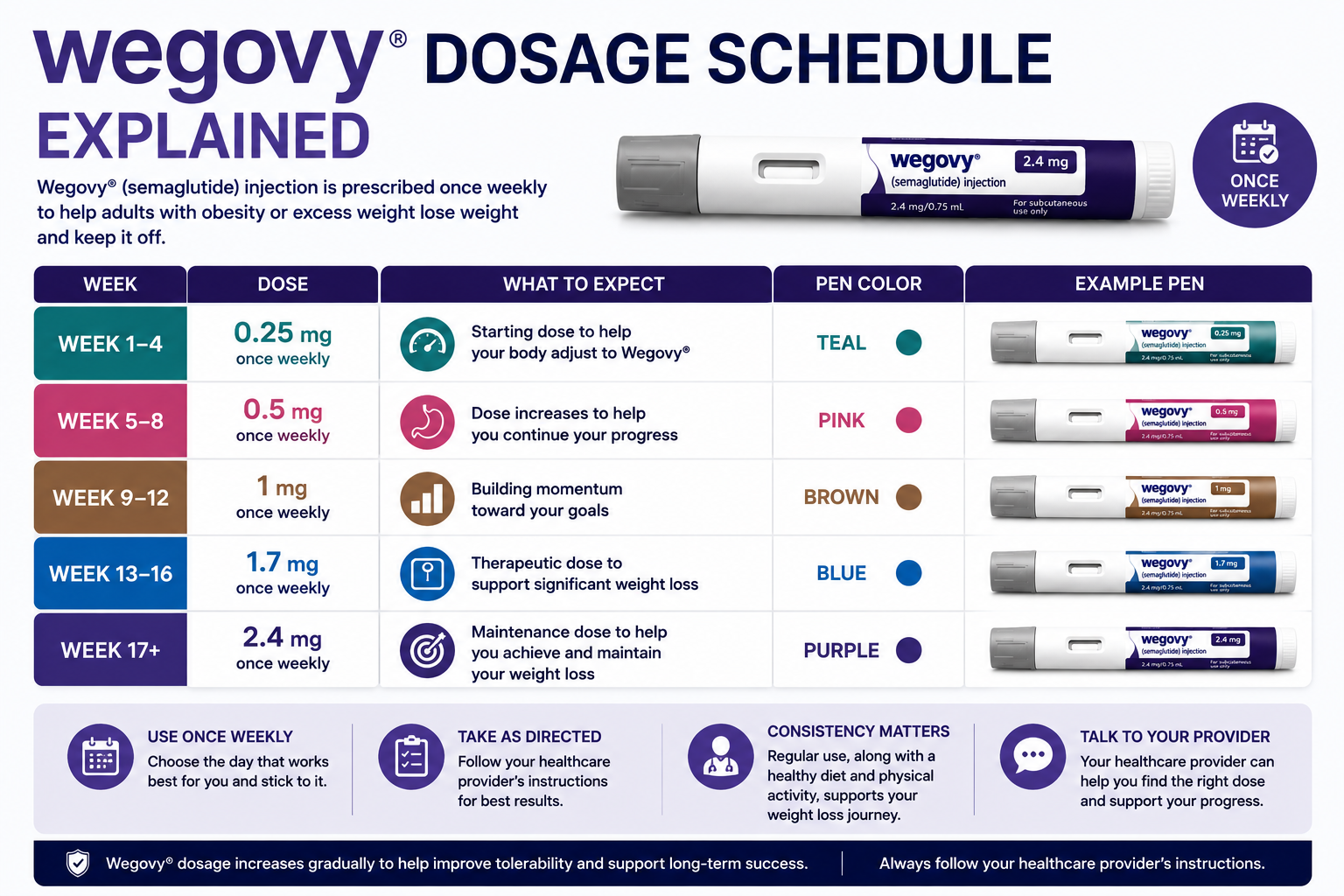
1. Wegovy Dosage Schedule Explained
The Wegovy Dosage Schedule is one of the most important parts of semaglutide treatment planning for weight management support. Because Wegovy affects appetite regulation and digestion, healthcare providers generally follow a gradual dosage progression designed to improve treatment tolerability and reduce digestive side effects.
Additionally, many USA users researching the Wegovy Dosage Schedule want to understand how weekly semaglutide injections are increased over time, what maintenance dosing looks like, and how long each dosage stage typically lasts.
This complete guide explains the Wegovy Dosage Schedule, the Wegovy titration schedule 2026, the Wegovy 2.4 mg maintenance guide, information about the Wegovy 7.2 mg max dose, comparisons involving Wegovy pill dosage vs injection, and guidance on how to increase Wegovy dose safely.
2.Table of Contents
- What Is Wegovy?
- Why the Wegovy Dosage Schedule Matters
- Wegovy Titration Schedule 2026
- Wegovy 2.4 mg Maintenance Guide
- Administering Injections for Safe Semaglutide Weight Loss
- How to Increase Wegovy Dose Safely
- Wegovy 7.2 mg Max Dose
- Wegovy Pill Dosage vs Injection
- Potential Side Effects During Dose Progression
- What Happens If You Miss a Dose?
- Lifestyle Changes Still Matter
- Frequently Asked Questions
- Sources
What Is Wegovy?
Wegovy is a once-weekly semaglutide injection commonly discussed in medically supervised weight management settings. Semaglutide belongs to a category of medications called GLP-1 receptor agonists, which influence appetite regulation, digestion, and feelings of fullness.
Because semaglutide affects digestion and appetite signals, the Wegovy Dosage Schedule generally follows a gradual titration process designed to improve treatment tolerability.
Why the Wegovy Dosage Schedule Matters
The Wegovy Dosage Schedule is important because semaglutide directly affects digestion and appetite regulation. Starting with lower doses helps the body adjust gradually while reducing the risk of digestive side effects.
Additionally, healthcare providers typically increase dosage slowly to improve long-term treatment consistency and patient comfort.
Consequently, following the recommended Wegovy Dosage Schedule carefully remains an important part of semaglutide treatment planning.
Wegovy Titration Schedule 2026
The Wegovy titration schedule 2026 generally follows progressive dosage increases over several months.
| Treatment Phase | Typical Weekly Dose | Purpose |
|---|---|---|
| Weeks 1–4 | 0.25 mg | Initial adjustment period |
| Weeks 5–8 | 0.5 mg | Gradual appetite regulation support |
| Weeks 9–12 | 1 mg | Progressive semaglutide increase |
| Weeks 13–16 | 1.7 mg | Intermediate treatment phase |
| Maintenance Phase | 2.4 mg | Long-term maintenance support |
However, healthcare providers may personalize the Wegovy titration schedule 2026 depending on treatment tolerance, side effects, and individual healthcare goals.
Wegovy 2.4 mg Maintenance Guide
The Wegovy 2.4 mg maintenance guide is commonly discussed because 2.4 mg is frequently associated with long-term semaglutide maintenance dosing.
During maintenance phases, healthcare providers may monitor:
- Digestive tolerance
- Hydration levels
- Appetite changes
- Treatment consistency
- Long-term healthcare planning
Additionally, maintaining balanced nutrition and hydration remains important during long-term semaglutide treatment.
Administering Injections for Safe Semaglutide Weight Loss
Starting Semaglutide requires a “titration” schedule to minimize gastrointestinal discomfort.
Explore available options in our
semaglutide collection and
starter dose products.
The Standard Titration Schedule (Injectable)
- Weeks 1-4: 0.25 mg once weekly.
View 0.25 mg injection - Weeks 5-8: 0.5 mg once weekly.
View 0.5 mg injection - Weeks 9-12: 1.0 mg once weekly.
View 1.0 mg injection - Weeks 13-16: 1.7 mg once weekly.
View 1.7 mg injection - Week 17+: Maintenance dose of 2.4 mg (Wegovy) or as directed by a physician.
Browse
2.4 mg maintenance options or explore the full
semaglutide category.
How to Take Rybelsus (Oral)
Rybelsus must be taken at least 30 minutes before the first food, beverage, or other oral medications of the day, with no more than 4 ounces of plain water.
See available
Rybelsus oral tablets or visit the
oral semaglutide collection.
How to Increase Wegovy Dose Safely?
Many individuals researching how to increase Wegovy dose safely want to understand how dosage progression works during semaglutide treatment.
Safe Dose Progression Tips
- Follow healthcare provider instructions carefully
- Do not increase dosage too quickly
- Monitor digestive symptoms consistently
- Stay hydrated during treatment
- Attend regular follow-up appointments
Because semaglutide affects digestion and appetite regulation, gradual dosage increases generally help improve treatment tolerability over time.
Wegovy 7.2 mg Max Dose
Many individuals researching the Wegovy 7.2 mg max dose are interested in future semaglutide dosage discussions and ongoing clinical research.
However, healthcare providers determine dosage planning carefully depending on treatment response, safety considerations, and evolving healthcare guidance.
Additionally, semaglutide dosage strategies may continue developing as clinical research expands over time.
Wegovy Pill Dosage vs Injection
Some individuals researching Wegovy pill dosage vs injection are comparing oral semaglutide treatments with weekly injectable semaglutide medications.
| Feature | Wegovy Injection | Oral Semaglutide Tablets |
|---|---|---|
| Administration | Weekly injection | Daily oral tablet |
| Treatment Schedule | Weekly | Daily |
| Active Ingredient | Semaglutide | Semaglutide |
| Healthcare Monitoring | Required | Required |
Healthcare providers determine the most appropriate treatment approach depending on healthcare goals, lifestyle preferences, and treatment tolerance.
Potential Side Effects During Dose Progression
During the Wegovy Dosage Schedule, some individuals may experience digestive side effects during dosage increases.
- Nausea
- Constipation
- Diarrhea
- Bloating
- Fatigue
- Reduced appetite
However, gradual dosage progression is generally used to improve overall treatment tolerability.
What Happens If You Miss a Dose?
Individuals who miss a Wegovy dose should consult healthcare providers or official medication instructions for guidance regarding treatment timing and schedule adjustments.
Additionally, maintaining consistent treatment schedules may support more stable semaglutide progression and long-term consistency.
Lifestyle Changes Still Matter
Although semaglutide may support appetite regulation, healthy lifestyle habits remain important during the Wegovy Dosage Schedule.
- Balanced nutrition
- Meal consistency
- Regular exercise
- Hydration
- Adequate sleep
Consequently, semaglutide medications are generally intended to complement structured health routines rather than replace healthy habits entirely.
Sources
- U.S. Food and Drug Administration (FDA)
- Centers for Disease Control and Prevention (CDC)
- MedlinePlus Drug Information
- Clinical studies on GLP-1 receptor agonists
- Metabolic health and semaglutide research publications
Internal Resources
Explore more: Semaglutide Collection | Wegovy vs Rybelsus | Ozempic Side Effects | Semaglutide Results
Frequently Asked Questions
The Wegovy Dosage Schedule is a structured semaglutide treatment progression plan designed to help the body adjust gradually to weekly injections. Because semaglutide directly affects appetite regulation and digestion, healthcare providers usually begin treatment with lower doses before increasing gradually over time. This approach may help reduce digestive discomfort and improve long-term treatment tolerability. Additionally, following the recommended dosage schedule carefully supports more consistent semaglutide treatment planning and monitoring.
The Wegovy titration schedule 2026 generally refers to progressive semaglutide dosage increases used during early treatment phases. Most treatment schedules begin with a low weekly dose before increasing gradually over several months. Healthcare providers commonly use titration schedules because semaglutide affects digestion and appetite regulation significantly during adjustment periods. Additionally, gradual dosage progression may help reduce digestive side effects such as nausea, bloating, constipation, and fatigue while supporting long-term treatment consistency.
Healthcare providers generally focus on how to increase Wegovy dose safely because semaglutide can affect digestive comfort and appetite regulation during dosage changes. Gradual progression allows the body time to adapt to treatment while reducing the likelihood of stronger digestive side effects. Additionally, healthcare providers monitor hydration, appetite changes, bowel habits, and overall treatment tolerance during each progression stage. Because every individual responds differently to semaglutide treatment, dosage schedules are often personalized based on treatment response and healthcare goals.
The Wegovy 2.4 mg maintenance guide refers to long-term semaglutide treatment planning once gradual dosage progression has been completed. During maintenance phases, healthcare providers often monitor digestive tolerance, hydration levels, appetite changes, treatment consistency, and overall healthcare goals. Additionally, individuals are generally encouraged to continue balanced nutrition, physical activity, and hydration throughout long-term semaglutide treatment. Because long-term treatment experiences vary between individuals, regular healthcare supervision remains important during maintenance phases.
Many individuals researching the Wegovy 7.2 mg max dose are interested in evolving semaglutide dosage discussions and ongoing clinical research involving higher-dose treatment strategies. However, healthcare providers carefully evaluate treatment safety, digestive tolerance, healthcare goals, and evolving clinical guidance before considering any dosage adjustments. Additionally, semaglutide treatment recommendations may continue changing as research expands and new healthcare data becomes available over time.
The comparison involving Wegovy pill dosage vs injection usually focuses on administration format and treatment schedules. Wegovy is commonly administered as a once-weekly semaglutide injection, while oral semaglutide medications are taken as daily tablets. Although both treatment formats contain semaglutide, healthcare providers may recommend different approaches depending on medical history, treatment goals, digestive tolerance, and lifestyle preferences. Additionally, some individuals prefer weekly injections for convenience, while others may prefer oral treatment formats.
Yes, digestive symptoms are commonly discussed during the Wegovy Dosage Schedule because semaglutide directly affects appetite regulation and gastric emptying. Some individuals experience nausea, constipation, diarrhea, bloating, reduced appetite, or fatigue during dosage progression stages. However, healthcare providers generally use gradual dosage increases specifically to improve tolerability and reduce digestive discomfort over time. Additionally, hydration, meal consistency, and balanced nutrition may support better digestive comfort during semaglutide treatment.
Individuals who miss a dose during the Wegovy Dosage Schedule should consult healthcare providers or official medication instructions for guidance regarding timing and schedule adjustments. Maintaining consistent weekly semaglutide treatment may help support more stable appetite regulation and long-term treatment consistency. Additionally, healthcare providers may recommend personalized guidance depending on how long treatment has been interrupted and where the individual is within the titration schedule.
Yes, healthy lifestyle habits remain extremely important during the Wegovy Dosage Schedule and long-term semaglutide treatment planning. Balanced nutrition, hydration, physical activity, meal consistency, and sleep quality continue to play major roles in overall healthcare management. Consequently, semaglutide medications are generally intended to complement structured health routines rather than replace healthy habits entirely. Additionally, healthcare providers often combine semaglutide treatment with broader lifestyle support strategies.
Medical supervision is important because semaglutide affects digestion, appetite regulation, hydration balance, and treatment tolerance throughout the Wegovy Dosage Schedule. Healthcare providers monitor dosage progression, digestive symptoms, hydration, side effects, and long-term treatment consistency during therapy. Additionally, follow-up appointments may help determine whether dosage adjustments or supportive lifestyle changes are necessary during treatment planning. Because every individual responds differently to semaglutide medications, personalized professional guidance remains an important part of safe long-term treatment management.
Conclusion
Semaglutide represents a paradigm shift in American healthcare. By addressing the biological drivers of hunger and insulin resistance, it offers hope to millions struggling with Type 2 Diabetes and obesity. However, success requires a partnership with a medical professional and a commitment to whole-body health.
Disclaimer: This article is for informational purposes only and does not constitute medical advice. Always consult with a qualified healthcare provider before starting any new medication.