
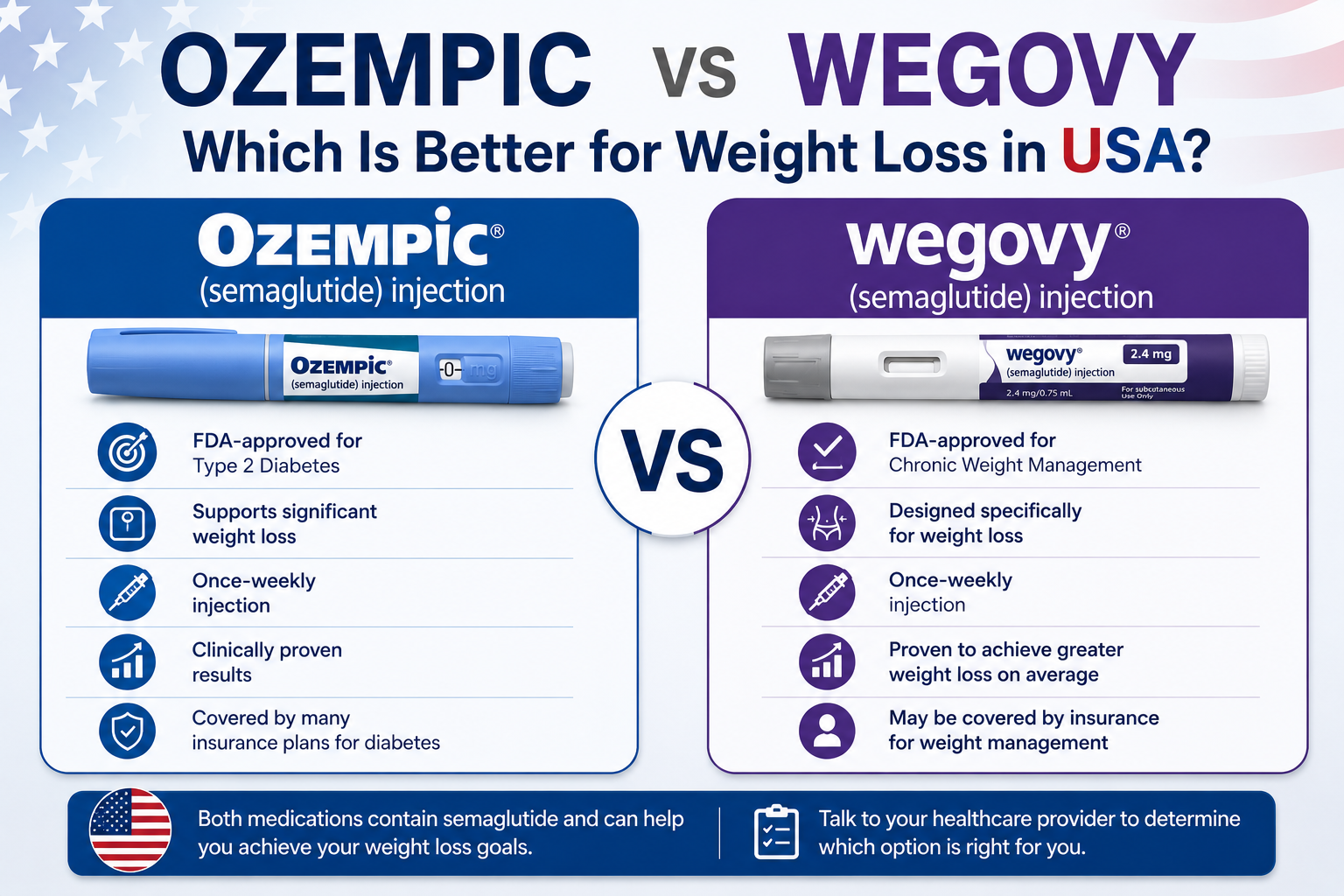
1.Ozempic vs Wegovy: Which Is Better for Weight Loss in USA?
2.Table of Contents
- What Are Ozempic and Wegovy?
- How Semaglutide Works
- Main Differences Between Ozempic and Wegovy
- Weight Loss Results Comparison
- Administering Injections for Safe Semaglutide Weight Loss
- Dosage Comparison
- Common Side Effects
- Potential Serious Risks
- Cost and Insurance Comparison
- Who May Be Eligible?
- Lifestyle Changes Still Matter
- Ozempic vs Wegovy for USA Users
- Frequently Asked Questions
- Conclusion
What Are Ozempic and Wegovy?
How Semaglutide Works
Semaglutide works by mimicking the GLP-1 hormone, which influences several biological systems related to hunger and metabolism.
- Slows gastric emptying
- Helps regulate appetite signals
- Supports feelings of fullness
- May reduce cravings
- Influences insulin response
As a result, semaglutide-based medications may support structured calorie management and appetite control under healthcare supervision.
Main Differences Between Ozempic and Wegovy
| Feature | Ozempic | Wegovy |
|---|---|---|
| Primary Focus | Type 2 diabetes management | Weight management support |
| Active Ingredient | Semaglutide | Semaglutide |
| Injection Frequency | Weekly | Weekly |
| Dosage Progression | Metabolic management focus | Higher maintenance focus |
Additionally, healthcare providers may personalize treatment plans depending on individual medical history, appetite regulation goals, and healthcare priorities.
Weight Loss Results Comparison
When comparing Ozempic vs Wegovy for weight loss, individuals often focus on appetite changes, calorie management, and long-term consistency.
Ozempic Weight Loss Results
Ozempic is frequently discussed in metabolic health settings because semaglutide affects appetite regulation and digestion. Some individuals report appetite-related changes and improved portion awareness during treatment.
Wegovy Weight Loss Results
Wegovy is commonly associated with medically supervised weight management programs. Additionally, Wegovy may involve different dosage progression strategies depending on long-term treatment planning.
However, treatment results vary depending on consistency, lifestyle habits, dosage progression, and healthcare supervision.
Administering Injections for Safe Semaglutide Weight Loss
Starting Semaglutide requires a “titration” schedule to minimize gastrointestinal discomfort.
Explore available options in our
semaglutide collection and
starter dose products.
The Standard Titration Schedule (Injectable)
- Weeks 1-4: 0.25 mg once weekly.
View 0.25 mg injection - Weeks 5-8: 0.5 mg once weekly.
View 0.5 mg injection - Weeks 9-12: 1.0 mg once weekly.
View 1.0 mg injection - Weeks 13-16: 1.7 mg once weekly.
View 1.7 mg injection - Week 17+: Maintenance dose of 2.4 mg (Wegovy) or as directed by a physician.
Browse
2.4 mg maintenance options or explore the full
semaglutide category.
How to Take Rybelsus (Oral)
Rybelsus must be taken at least 30 minutes before the first food, beverage, or other oral medications of the day, with no more than 4 ounces of plain water.
See available
Rybelsus oral tablets or visit the
oral semaglutide collection.
Dosage Comparison
One of the most important differences in Ozempic vs Wegovy comparisons involves dosage schedules and maintenance levels.
| Medication | Starter Dose | Maintenance Approach |
|---|---|---|
| Ozempic | Lower gradual start | Metabolic management progression |
| Wegovy | Lower gradual start | May progress to higher maintenance levels |
Because semaglutide may cause digestive side effects during early treatment stages, gradual dose progression is commonly used to improve tolerability.
Common Side Effects
Both Ozempic and Wegovy may cause similar side effects because they contain semaglutide.
- Nausea
- Vomiting
- Constipation
- Diarrhea
- Bloating
- Reduced appetite
- Fatigue
However, many individuals find that side effects improve gradually as the body adjusts to treatment.
Potential Serious Risks
Although many people tolerate semaglutide well, some rare but serious risks may require medical attention.
- Pancreatitis
- Severe dehydration
- Gallbladder-related concerns
- Kidney-related complications
- Certain thyroid-related warnings
Therefore, healthcare providers generally review medical history carefully before prescribing semaglutide medications.
Cost and Insurance Comparison
Ozempic vs Wegovy comparisons also involve insurance coverage and long-term treatment costs.
- Insurance policies may differ
- Prior authorization may apply
- Consultation fees may vary
- Long-term treatment planning affects total costs
Additionally, healthcare providers may structure treatment programs differently depending on monitoring and support services.
Who May Be Eligible?
Eligibility depends on healthcare evaluation and individual treatment goals.
- Adults with type 2 diabetes
- Adults requiring weight management support
- Individuals with weight-related health concerns
- Individuals requiring metabolic support
Because every individual responds differently, treatment plans are generally personalized.
Lifestyle Changes Still Matter
Although Ozempic and Wegovy may support appetite regulation, healthy lifestyle habits remain extremely important.
- Balanced nutrition
- Regular physical activity
- Hydration
- Meal consistency
- Adequate sleep
Consequently, semaglutide medications are generally intended to complement structured lifestyle management rather than replace it.
Ozempic vs Wegovy for USA Users
USA users researching Ozempic vs Wegovy should understand that healthcare regulations, provider policies, insurance requirements, and treatment access may vary.
| Feature | Ozempic | Wegovy |
| Primary FDA Approval | Type 2 Diabetes | Chronic Weight Management |
| Max Injectable Dose | 2.0 mg weekly | 2.4 mg (Standard) or 7.2 mg (New for 2026) |
| Oral Form Available | Yes (Rybelsus) | Yes (Wegovy Pill, launched Jan 2026) |
| Primary Benefit | Blood sugar & A1C control | High-percentage body weight loss |
| CV Benefit | Lower risk of CV events in T2D | Lower risk of death/stroke in Obesity |
Internal Resources
Explore more: Semaglutide Collection | Semaglutide Side Effects | Semaglutide Dosage Guide | Semaglutide Results
Frequently Asked Questions
The main difference between Ozempic vs Wegovy involves the primary treatment focus, dosage progression, and healthcare planning. Although both medications contain semaglutide and are administered as weekly injections, Ozempic is commonly associated with type 2 diabetes management, while Wegovy is more frequently discussed in medically supervised weight management programs. Additionally, Wegovy may involve higher long-term maintenance dosing depending on healthcare goals. Because treatment plans are personalized, healthcare providers evaluate medical history, metabolic health, and long-term objectives before recommending either option.
Many individuals researching Ozempic vs Wegovy ask whether Wegovy produces better weight management outcomes. Because Wegovy is commonly structured around weight management support, some healthcare providers may recommend it specifically for appetite regulation and calorie management goals. However, results vary depending on consistency, lifestyle habits, dosage progression, healthcare supervision, and individual response to semaglutide treatment. Additionally, treatment planning is highly individualized, which means healthcare providers determine the most appropriate option based on medical needs and long-term healthcare priorities.
Yes, Ozempic and Wegovy work through similar biological mechanisms because both medications contain semaglutide, a GLP-1 receptor agonist. These medications influence appetite regulation, digestion speed, insulin response, and feelings of fullness. Additionally, semaglutide slows gastric emptying, which may help individuals feel full for longer periods after eating. Because of these effects, both Ozempic and Wegovy are commonly discussed in metabolic management and appetite-related treatment settings.
The side effects of Ozempic vs Wegovy are generally similar because both medications contain semaglutide. Common side effects may include nausea, vomiting, diarrhea, constipation, bloating, fatigue, and reduced appetite. These symptoms are often more noticeable during early treatment stages or after dosage increases. However, gradual dosage progression is commonly used to improve tolerability and reduce digestive discomfort over time. Additionally, healthcare providers monitor side effects closely throughout treatment progression.
The timeline for noticeable changes varies between individuals. Some people may experience appetite-related changes within the first few weeks of treatment, while longer-term outcomes may develop gradually over several months. Additionally, semaglutide treatment typically follows progressive dosage increases over time, which influences how quickly effects become noticeable. Because long-term outcomes depend on consistency and healthy lifestyle habits, healthcare providers usually encourage structured nutrition and physical activity during treatment.
Although Ozempic and Wegovy both contain semaglutide, they are commonly associated with different healthcare focuses. Ozempic is frequently discussed in relation to blood sugar and metabolic management, while Wegovy is commonly associated with weight management programs. However, healthcare providers personalize treatment decisions depending on individual health goals, medical history, and provider evaluation. Consequently, treatment planning may differ significantly between individuals.
Yes, insurance coverage may vary significantly between Ozempic vs Wegovy depending on healthcare plans, treatment goals, and provider requirements. Some insurance plans may provide broader coverage for metabolic or diabetes-related treatment, while weight management programs may require additional approval steps. Additionally, prior authorization requirements, consultation fees, and long-term monitoring costs may influence total treatment expenses. Therefore, individuals should discuss insurance policies carefully with providers before beginning therapy.
Yes, healthy lifestyle habits remain extremely important during semaglutide treatment. Although Ozempic and Wegovy may support appetite regulation and calorie management, balanced nutrition, physical activity, hydration, meal planning, and sleep quality continue to play major roles in long-term consistency. Consequently, semaglutide medications are generally intended to complement healthy lifestyle strategies rather than replace them entirely.
Eligibility depends on healthcare evaluation, medical history, and treatment goals. Healthcare providers may consider body mass index (BMI), metabolic health, type 2 diabetes status, current medications, weight-related health concerns, and overall lifestyle habits before recommending treatment. Additionally, treatment plans are usually customized according to individual response and long-term healthcare planning priorities.
Medical supervision is important because semaglutide medications affect appetite regulation, digestion, insulin response, and metabolic balance. Healthcare providers monitor dosage progression, treatment tolerance, side effects, and overall healthcare goals throughout therapy. Additionally, regular follow-up appointments may help identify whether treatment adjustments or additional lifestyle support are necessary. Because every individual responds differently, professional guidance helps support safer and more personalized treatment management.
Conclusion
Semaglutide represents a paradigm shift in American healthcare. By addressing the biological drivers of hunger and insulin resistance, it offers hope to millions struggling with Type 2 Diabetes and obesity. However, success requires a partnership with a medical professional and a commitment to whole-body health.
Disclaimer: This article is for informational purposes only and does not constitute medical advice. Always consult with a qualified healthcare provider before starting any new medication.